IAE Academy

GATE BT

Protoplast fusion and transgenic plants

Protoplasts are plant cells with the wall removed. They can be fused to make somatic hybrids and cybrids, or used as recipients of foreign DNA. Transgenic plants are made by indirect (Agrobacterium) or direct (biolistic, electroporation, PEG) gene transfer. Selectable markers and reporter genes are used to find transformed cells, and plastid transformation places genes in the chloroplast genome. The key points are the vir genes and vectors, which marker or reporter fits a situation, hybrid versus cybrid, and simple segregation arithmetic.

4 previous-year questions · 4 solved · 6 practice questions

Protoplasts: isolation and culture

A protoplast is a plant cell whose cell wall has been removed, leaving the plasma membrane as the outer boundary. With no wall it can take up DNA, fuse with another protoplast and, in suitable culture, rebuild a wall and divide. Protoplasts are totipotent in principle: a cultured protoplast can form a callus and then a whole plant, although how readily plants regenerate depends strongly on the species and genotype.

Isolation and culture in order

  1. Take young, healthy tissue, usually leaf mesophyll or a cell suspension culture, and surface-sterilise it.

  2. Digest the wall with an enzyme mixture: cellulase (cellulose), pectinase or macerozyme (pectin of the middle lamella) and sometimes hemicellulase.

  3. Digest in an osmoticum of about 0.4 to 0.6 M mannitol or sorbitol. Without a wall the protoplasts burst in a hypotonic medium.

  4. Filter out debris, then purify the protoplasts by low-speed centrifugation and washing.

  5. Check viability, for example with fluorescein diacetate (living cells fluoresce green) or Evans blue (dead cells stain blue).

  6. Culture at a plating density of about to protoplasts per mL (below a minimum density they do not divide), in a medium with an osmoticum and growth regulators: an auxin such as 2,4-D (2,4-dichlorophenoxyacetic acid) or NAA (1-naphthaleneacetic acid) and a cytokinin such as BAP (6-benzylaminopurine). The wall regenerates in a few days, the cells divide to form microcolonies and then microcalli, and shoots regenerate from the callus.

EXAM TIP

The osmoticum is needed in the isolation, washing and early culture media, and it is lowered gradually once the wall has re-formed. A question that asks why protoplasts burst in plain water is testing this point.

Protoplast fusion: somatic hybrids and cybrids

Protoplasts of two parents are brought together and induced to fuse. This allows crosses between species that cannot be crossed sexually, because it bypasses the pre-fertilisation barriers. Incompatibility after fusion can still stop the product from growing. Fusing protoplasts of different parents gives a heterokaryon: the nuclei of both parents in a shared cytoplasm. Fusing two protoplasts of the same parent gives a homokaryon. If the nuclei of a heterokaryon fuse (a synkaryon), the cell becomes a somatic hybrid. If one nucleus is lost or inactivated, the product can be a cybrid.

Method

How it works

Notes

PEG-induced fusion

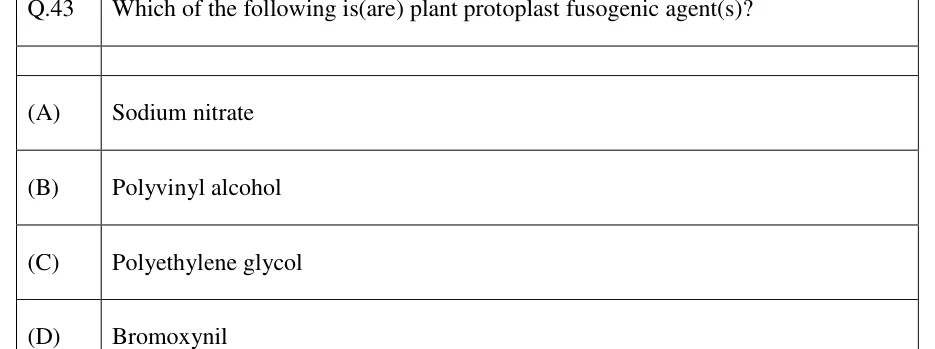
Polyethylene glycol (molecular weight about 1,500 to 6,000, commonly about 30 to 40 percent w/v) makes adjacent protoplast membranes stick together. Washing with high at high pH (about 9 to 10) then causes fusion.

Chemical method, simple and cheap, no special equipment; not specific to which protoplasts fuse

High at high pH alone

Protoplasts are incubated in a medium with a high calcium ion concentration at high pH

Chemical method, also used with PEG

Sodium nitrate

Protoplasts are treated with sodium nitrate solution

Earliest chemical method, low fusion frequency

Electrofusion

An alternating field aligns the protoplasts into pearl chains (dielectrophoresis), then a short direct-current pulse fuses the touching membranes

Higher and more controlled yield, no chemical toxicity, needs a fusion chamber

Product

Nucleus

Cytoplasm (chloroplasts, mitochondria)

Symmetric somatic hybrid

Nuclei of both parents, fused

Organelles of both parents at first; chloroplasts usually sort out to one parent's type during later divisions, while mitochondrial genomes often recombine

Asymmetric hybrid

Nucleus of one parent plus only a few chromosomes or fragments of the other (the donor is irradiated)

Mixed or from one parent

Cybrid (cytoplasmic hybrid)

Nucleus of one parent only (the other nucleus is lost, inactivated by irradiation, or absent because an enucleated protoplast was used)

Cytoplasm of both parents at first; organelles may later sort out, so the cell can carry the nucleus of one parent with the chloroplasts or mitochondria of the other

CHROMOSOME NUMBER OF A SYMMETRIC SOMATIC HYBRID

Applies when one protoplast of each parent fuses, the nuclei fuse and no chromosomes are lost. The hybrid of two diploid parents is an amphidiploid (allotetraploid). Chromosome loss or elimination makes the number lower, and a hybrid made with irradiated donor protoplasts keeps fewer chromosomes.

Selection of fusion products. Unfused parental protoplasts and homokaryons must be removed. Common strategies are: (1) complementation, where each parent is blocked in a different way so only the hybrid grows. For example, one parent is an albino mutant that can regenerate, and the other is green but cannot regenerate in the medium used; or the two parents carry different non-allelic mutations. (2) Metabolic inactivation plus irradiation. The parent that will supply the nucleus is treated with a metabolic inhibitor, such as iodoacetate or iodoacetamide (or rhodamine 6G, which inactivates mitochondria). The other parent is given X-ray or gamma irradiation to inactivate its nucleus. Neither parent can divide alone, but the fusion product can. The irradiated parent supplies cytoplasm (cybrid) or a few chromosome fragments (asymmetric hybrid). (3) Fluorescent labelling of the two parents with different dyes, such as fluorescein isothiocyanate (green) and rhodamine isothiocyanate (red), or the natural red chlorophyll fluorescence of mesophyll protoplasts. The dual-labelled fusion products are then sorted with a fluorescence-activated cell sorter or picked with a micromanipulator. (4) Differences in morphology or resistance, with later confirmation by isozyme patterns, chromosome counts or molecular markers.

A well-known example is the pomato, a somatic hybrid of potato and tomato, which is of scientific interest but not a useful crop. Cybrids have been used to transfer cytoplasmic male sterility between related plants, since this trait is carried by mitochondrial genes. In Brassica, cybrids have also been used to transfer triazine (atrazine) herbicide resistance, which is encoded in the chloroplast genome.

WORKED EXAMPLE

Protoplasts of plant A (2n = 24) and plant B (2n = 26) are fused one to one and the nuclei fuse with no chromosome loss. What is the somatic chromosome number of the regenerated hybrid, and is it a hybrid or a cybrid?

Solution
  1. The nuclei of both parents are present, so the product is a somatic hybrid, not a cybrid.

  2. 2n(hybrid) = 24 + 26 = 50.

Answer: 50 chromosomes; a somatic hybrid.

EXAM TIP

A cybrid is defined by its nucleus, which comes from one parent only, while its cytoplasm carries organelles of the other parent. Do not call every fusion product a hybrid in an answer that asks for a cybrid.

Agrobacterium-mediated transfer (indirect method)

Agrobacterium tumefaciens is a soil bacterium that causes crown gall disease. It carries a large Ti (tumour-inducing) plasmid. A segment of this plasmid, the T-DNA, is transferred into the plant cell and integrates into the nuclear genome. There its genes make the plant produce the auxin indole-3-acetic acid (IAA; genes iaaM, tryptophan monooxygenase, and iaaH, indoleacetamide hydrolase), a cytokinin (gene ipt, isopentenyl transferase) and opines, which the bacterium uses as food. The vir genes that carry out the transfer lie on the Ti plasmid outside the T-DNA, and chromosomal genes of the bacterium (chv genes) are needed for attachment to the plant cell. In genetic engineering the tumour-causing T-DNA genes are replaced with the gene of interest, and the strain is said to be disarmed. Only the two border sequences of the T-DNA are needed in cis for transfer, not the genes between them; the vir genes act in trans.

Steps of T-DNA transfer

  1. A wounded plant cell releases phenolic compounds such as acetosyringone. Certain sugars and acidic pH enhance the response.

  2. The membrane sensor kinase VirA detects the phenolics, autophosphorylates and transfers the phosphate to VirG, which switches on transcription of the other vir operons.

  3. VirD2, helped by VirD1, nicks the bottom strand of the T-DNA at the border sequences (25 bp imperfect direct repeats, the right border and left border). VirD2 stays covalently attached to the 5' end of the single-stranded T-strand. Transfer starts at the right border, so the T-strand runs from the right border to the left border.

  4. The VirB proteins, with the coupling protein VirD4, form a type IV secretion channel. The VirD2–T-strand complex is passed through it into the plant cell, and VirE2 is exported separately through the same channel.

  5. VirE2, a single-stranded DNA-binding protein, coats the T-strand in the plant cell and protects it from nucleases. VirD2 and VirE2 help carry the complex into the nucleus.

  6. In the nucleus the T-DNA integrates at a random site, using the plant's own DNA repair machinery (illegitimate recombination, not homologous recombination).

Vir gene or region

Function

VirA

Sensor kinase for phenolic signals

VirG

Response regulator, activates transcription of the vir operons

VirD1 and VirD2

VirD2 is the endonuclease that cuts at the T-DNA borders, assisted by VirD1; VirD2 stays attached to the 5' end of the T-strand and guides it

VirD4

Coupling protein that delivers the substrates to the secretion channel

VirE2

Binds the single-stranded T-strand

VirB

Type IV secretion system

VirC1

Binds the overdrive sequence next to the right border and enhances transfer

Border repeats (RB, LB)

Cis sequences that define the transferred segment. The right border is the more important, because transfer starts there and the overdrive enhancer lies next to it.

Vector system

How it is built

Key point

Co-integrate

The T-DNA with the gene of interest is on a small E. coli plasmid (intermediate vector) with a region homologous to a disarmed Ti plasmid; a single homologous recombination fuses the two into one plasmid in Agrobacterium

Large, stable single plasmid, but the recombination step is needed

Binary

T-DNA borders and gene of interest are on a small plasmid that replicates in both E. coli and Agrobacterium; the vir genes are on a separate disarmed helper Ti plasmid

The vir genes act in trans, so no recombination is needed; the most widely used system

Agrobacterium infects dicots naturally. Monocots, such as cereals, are less susceptible, partly because their wounded tissues produce little of the phenolic inducers. They can still be transformed by adding acetosyringone, using highly virulent strains or super-binary vectors (which carry extra vir genes), and choosing suitable explants such as immature embryos or callus. For Arabidopsis, the floral dip method transforms developing ovules in the intact plant, so tissue culture is not needed.

Agrobacterium rhizogenes carries the Ri (root-inducing) plasmid. Its T-DNA carries rol genes, which cause hairy root disease. Hairy root cultures grow fast without added growth regulators and are used to produce secondary metabolites. The Ri plasmid can also serve as a vector.

EXAM TIP

The vir genes themselves are not transferred; only the DNA between the borders is. A binary vector keeps the vir genes on a different plasmid from the T-DNA.

Direct gene transfer methods

Method

Principle

Typical target or note

Particle bombardment (biolistics, gene gun)

DNA is coated on microscopic gold or tungsten particles and fired into cells with high-pressure helium

Usable with almost any species and tissue, including cereals; the usual way to transform plastids; often gives multiple copies and fragmented insertions

Electroporation

A brief high-voltage pulse opens transient pores in the membrane of protoplasts, letting DNA enter

Mainly protoplasts, sometimes wounded tissue; regeneration from protoplasts can be difficult

PEG-mediated uptake

PEG, with divalent cations such as or , makes the protoplast membrane take up naked DNA

Needs protoplasts and no special equipment; limited by regeneration from protoplasts; also used to transform plastids

Liposome-mediated transfer

DNA enclosed in lipid vesicles is delivered to protoplasts by membrane fusion

Needs protoplasts

Microinjection

DNA is injected directly into a cell or nucleus using a fine glass needle

Precise but slow, one cell at a time, so few cells are treated

Silicon carbide whiskers

Cells are vortexed with whiskers and DNA; the whiskers make small holes

Simple but a health hazard to handle

Compared with Agrobacterium, direct methods have no host-range limit and need no bacterial vector. However, the DNA often integrates as multiple, rearranged copies, which makes silencing and unstable inheritance more likely. Agrobacterium tends to give fewer copies with defined borders.

EXAM TIP

If a question asks which method works on a species that Agrobacterium does not infect well, or which method is used for chloroplast transformation, the usual answer is particle bombardment. PEG treatment of protoplasts is the other method used for plastids.

Selectable markers and reporter genes

Only a small fraction of treated cells take up and integrate the transgene. A selectable marker gene allows only the transformed cells to survive or grow under a selective agent. A reporter gene encodes an easily assayed product. It is used to check where and how strongly a gene or promoter is expressed, or to identify transformed tissue without killing untransformed cells.

Gene

Product

Selective agent or role

nptII (neo)

Neomycin phosphotransferase II

Resistance to kanamycin, neomycin and G418, by phosphorylating the antibiotic (some monocots tolerate kanamycin naturally, so it selects poorly in them)

hpt (aphIV)

Hygromycin phosphotransferase

Resistance to hygromycin B

bar or pat

Phosphinothricin acetyltransferase

Tolerance to the herbicide phosphinothricin (glufosinate, sold as Basta) and to bialaphos

EPSPS (a glyphosate-insensitive form, such as the bacterial CP4 enzyme)

5-enolpyruvylshikimate-3-phosphate synthase

Tolerance to the herbicide glyphosate

aadA

Aminoglycoside 3''-adenylyltransferase

Spectinomycin and streptomycin resistance; the usual marker for plastid transformation

manA (pmi)

Phosphomannose isomerase

Lets transformed cells use mannose as a carbon source (positive selection without an antibiotic or herbicide)

Reporter

Product

Detection

gusA (uidA)

β-glucuronidase

Histochemical: the substrate X-Gluc (5-bromo-4-chloro-3-indolyl β-D-glucuronide) gives an insoluble blue precipitate, and the staining kills the tissue, so it is a destructive assay. A fluorometric assay with MUG (4-methylumbelliferyl β-D-glucuronide) measures activity quantitatively. Most plants have little endogenous activity.

gfp

Green fluorescent protein (from the jellyfish Aequorea victoria)

Fluoresces green when excited with blue or ultraviolet light. It needs no substrate or cofactor (only oxygen to form its chromophore) and works in living cells, so it is non-destructive.

luc

Firefly luciferase

Emits light when luciferin, ATP, and oxygen are present; very sensitive, measured with a luminometer or camera

After selection, transgenic plants are confirmed by PCR (presence of the transgene), Southern hybridisation (integration into the genome and copy number) and checks of expression (RT-PCR, northern or western blots, or enzyme assays). Where a plant should not keep its marker, the marker can be removed with the Cre-lox system. It can also be avoided by co-transformation: the marker and the gene of interest go on separate T-DNAs and later segregate apart.

EXAM TIP

Do not mix up the roles. nptII, hpt and bar are selectable markers because they allow growth under selection, while gusA, gfp and luc are reporters that you detect, not select with.

Plastid transformation and transgenic crops

The plastid genome (plastome) of flowering plants is a circular DNA of roughly 120 to 160 kb. A leaf cell has many chloroplasts and each has many copies of the plastome, so one cell can hold thousands of copies. In plastid transformation the transgene, flanked by plastome sequences, is delivered by particle bombardment (or by PEG treatment of protoplasts) and integrates by homologous recombination at a defined site. A plastid marker such as aadA (spectinomycin resistance) is used. Repeated rounds of selection on regeneration medium are needed to reach homoplasmy, where every plastome copy carries the transgene.

Feature

Plastid transformation

Nuclear transformation

Integration

Site-specific by homologous recombination

Random, giving position effects

Copies of the gene per cell

Very high, because of many plastomes per cell

Usually one to a few

Expression level

Often very high; no position effect and no gene silencing

Usually lower, and gene silencing may occur

Inheritance

Maternal in most angiosperms, so little spread through pollen (some species pass plastids through both parents)

Biparental, Mendelian

Multiple genes

Can be expressed together as an operon

Each gene normally needs its own promoter

Limits

Plastids do not carry out eukaryotic glycosylation; homoplasmy is hard to achieve in many crops

Broad choice of species and methods

Examples of transgenic crops and traits at GATE level: Bt cotton and Bt maize (the cry genes of Bacillus thuringiensis give insect resistance) and herbicide-tolerant crops (a glyphosate-insensitive EPSPS or the bar gene). Golden Rice carries a plant phytoene synthase (psy) and a bacterial carotene desaturase (crtI), which give beta-carotene in the grain. Virus-resistant papaya carries a viral coat protein gene. In the Flavr Savr tomato, an antisense polygalacturonase gene reduces pectin breakdown and slows softening.

FRACTION OF SELFED PROGENY CARRYING AT LEAST ONE TRANSGENE LOCUS

For a primary transformant that is hemizygous at n independent, unlinked single-copy loci, with each locus carrying a dominant, fully expressed marker and no loss in transmission or viability, selfed. At one locus the selfed progeny are 1/4 homozygous, 1/2 hemizygous and 1/4 without the transgene, so 3 with the transgene to 1 without and P = 3/4. Two loci give 15:1. Does not apply to linked loci or to plastid genes, which are maternally inherited.

FRACTION OF PROGENY CARRYING AT LEAST ONE TRANSGENE LOCUS WHEN CROSSED TO A NON-TRANSGENIC PLANT

For the same hemizygous transformant (n independent, unlinked single-copy loci) crossed with a non-transgenic plant. Each locus is passed to half the progeny, so one locus gives 1:1.

TRANSFORMATION EFFICIENCY (ONE COMMON DEFINITION)

Counts independent events, so several plants regenerated from one callus count once. Other definitions are also used, such as transgenic events per explant, per µg of DNA, or per treated cell, so read the definition a question gives.

WORKED EXAMPLE

A primary transformant is hemizygous at three independent, unlinked loci, each with one T-DNA copy carrying a dominant selectable marker. If it is selfed, what percentage of seedlings will survive on the selective agent that its marker confers?

Solution
  1. Each locus segregates 3 transgenic to 1 non-transgenic, so the chance of lacking a given locus is 1/4.

  2. The chance of lacking all three independent loci is (1/4)^3 = 1/64.

  3. A seedling survives if it has at least one locus, so P = 1 - 1/64 = 63/64.

  4. 63/64 x 100 = 98.4 percent.

Answer: About 98.4 percent.

EXAM TIP

Because plastid genes are inherited through the mother in most angiosperms, a plastid transgene does not follow the 3:1 Mendelian ratio in selfed progeny and its spread through pollen is very low.

PREVIOUS-YEAR QUESTIONS

4 questions from the BT papers

Try each question first, then open the answer. We placed each question under a topic ourselves; the exam paper does not label topics.

See these papers in full: GATE BT 2025 · GATE BT 2023 · GATE BT 2020 · GATE BT 2019

GATE 2025 BT Q.48

GATE 2025 · BTQ.48 · 2 marks · MCQ

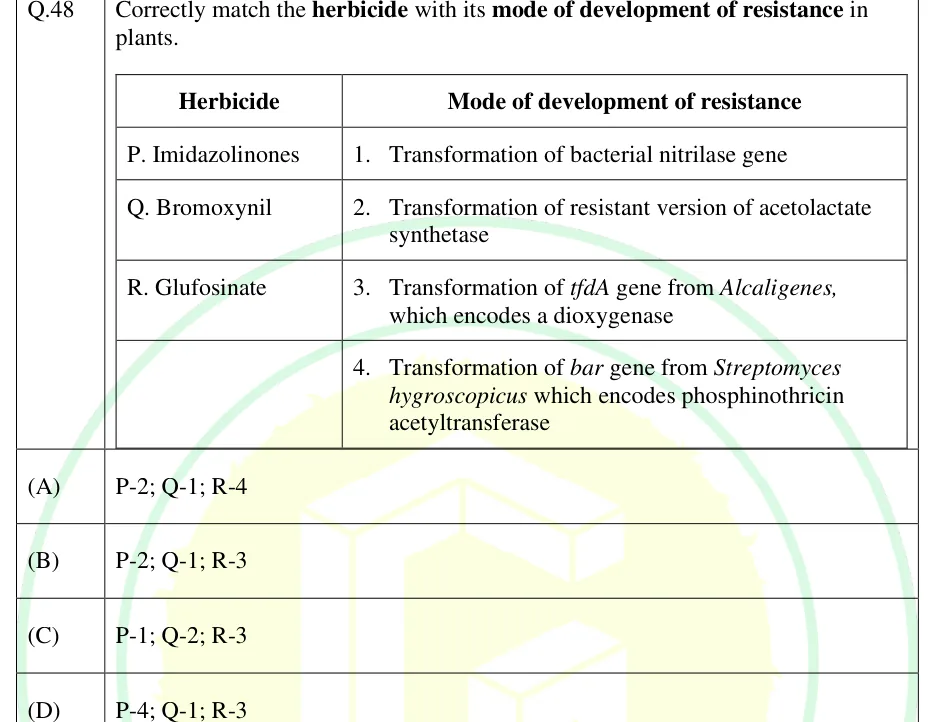
Correctly match the herbicide with its mode of development of resistance in plants. Herbicide: P. Imidazolinones; Q. Bromoxynil; R. Glufosinate. Mode of development of resistance: 1. Transformation of bacterial nitrilase gene; 2. Transformation of resistant version of acetolactate synthetase; 3. Transformation of tfdA gene from Alcaligenes, which encodes a dioxygenase; 4. Transformation of bar gene from Streptomyces hygroscopicus which encodes phosphinothricin acetyltransferase.

  1. (A)

    P-2; Q-1; R-4

  2. (B)

    P-2; Q-1; R-3

  3. (C)

    P-1; Q-2; R-3

  4. (D)

    P-4; Q-1; R-3

Answer and solution
See the question in the paper
GATE 2025 BT Q.48: answer and solution

GATE 2020 BT Q.42

GATE 2020 · BTQ.42 · 2 marks · MCQ

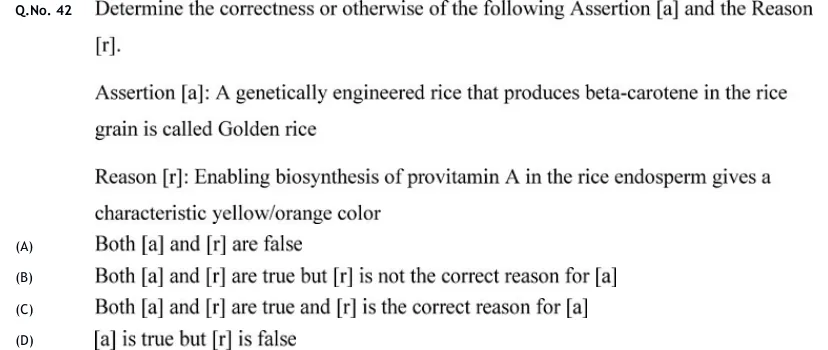
Determine the correctness or otherwise of the following Assertion [a] and the Reason [r].

Assertion [a]: A genetically engineered rice that produces beta-carotene in the rice grain is called Golden rice

Reason [r]: Enabling biosynthesis of provitamin A in the rice endosperm gives a characteristic yellow/orange color

  1. (A)

    Both [a] and [r] are false

  2. (B)

    Both [a] and [r] are true but [r] is not the correct reason for [a]

  3. (C)

    Both [a] and [r] are true and [r] is the correct reason for [a]

  4. (D)

    [a] is true but [r] is false

Answer and solution
See the question in the paper
GATE 2020 BT Q.42: answer and solution

PRACTICE

6 questions to test yourself

PRACTICE 11 mark · MCQ

Which of the following fusion products is a cybrid?

  1. (A)

    A cell with both parental nuclei and both parental cytoplasms

  2. (B)

    A cell with the nucleus of parent X and the cytoplasm of parent Y

  3. (C)

    A cell with a nucleus of parent X and a few chromosomes of irradiated parent Y

  4. (D)

    A cell with two nuclei of the same parent

Answer and solution

Answer: (B)

  1. A cybrid has the nucleus of one parent only, with cytoplasm from the other parent or a mixture of both.

  2. Option A is a heterokaryon, or a symmetric somatic hybrid once the nuclei fuse; C is an asymmetric hybrid; D is a homokaryon.

  3. The answer is B.

PRACTICE 21 mark · MCQ

In Agrobacterium tumefaciens, which protein nicks the Ti plasmid at the border sequences and remains attached to the 5' end of the T-strand?

  1. (A)

    VirA

  2. (B)

    VirE2

  3. (C)

    VirD2

  4. (D)

    VirG

Answer and solution

Answer: (C)

  1. VirA is a sensor kinase and VirG a response regulator.

  2. VirE2 coats single-stranded T-DNA but does not nick the borders.

  3. VirD2, assisted by VirD1, nicks the borders, and VirD2 stays bound to the 5' end of the T-strand.

  4. The answer is C.

PRACTICE 32 marks · MSQ

Which of the following statements about selectable markers and reporter genes are correct?

  1. (A)

    The gusA product acts on X-Gluc to give a blue colour.

  2. (B)

    The bar gene gives resistance to kanamycin.

  3. (C)

    Green fluorescent protein can be detected in living cells without adding a substrate.

  4. (D)

    Firefly luciferase emits light in the presence of luciferin, ATP and oxygen.

Answer and solution

Answer: (A), (C), (D)

  1. A is correct: β-glucuronidase cleaves X-Gluc to a blue product.

  2. B is wrong: bar confers tolerance to phosphinothricin, while nptII confers kanamycin resistance.

  3. C is correct: GFP fluoresces on its own under blue or UV light.

  4. D is correct: luciferase needs luciferin, ATP and O2 (with Mg2+).

  5. The answer is A, C and D.

PRACTICE 42 marks · NAT

A primary transgenic plant is hemizygous for two independent, unlinked, single-copy T-DNA insertions, each carrying a dominant kanamycin resistance gene. It is self-pollinated. What percentage of its progeny is expected to be kanamycin-resistant? Give the answer to two decimal places.

Answer and solution

Answer: (accepted range )

  1. At one hemizygous locus a selfed plant gives 3/4 with the transgene and 1/4 without.

  2. A seedling is sensitive only if it lacks both loci: (1/4)^2 = 1/16.

  3. Resistant fraction = 1 - 1/16 = 15/16 = 0.9375.

  4. The answer is 93.75 percent.

PRACTICE 51 mark · MCQ

Which statement about plastid transformation in most angiosperms is correct?

  1. (A)

    The transgene spreads widely through pollen

  2. (B)

    The transgene integrates by homologous recombination and is present in many copies per cell

  3. (C)

    The transgene must be flanked by T-DNA border sequences

  4. (D)

    The transgene integrates at a random site in the nuclear genome

Answer and solution

Answer: (B)

  1. Plastid transformation uses flanking plastome sequences for homologous recombination at a set site.

  2. Each cell has many plastomes, so the number of transgene copies per cell is high.

  3. A is wrong because plastids are inherited maternally in most angiosperms. C is wrong because T-DNA borders belong to Agrobacterium transfer, not to plastid vectors. D is wrong because random nuclear integration describes nuclear transformation.

  4. The answer is B.

PRACTICE 61 mark · MCQ

In a binary vector system for Agrobacterium-mediated transformation, where are the vir genes located?

  1. (A)

    Between the T-DNA borders of the binary vector

  2. (B)

    On a separate disarmed helper Ti plasmid in the same Agrobacterium cell

  3. (C)

    In the plant nuclear genome

  4. (D)

    On the E. coli chromosome

Answer and solution

Answer: (B)

  1. The binary vector carries the T-DNA borders and the gene of interest, and replicates in both E. coli and Agrobacterium.

  2. The vir genes act in trans from a separate disarmed helper Ti plasmid in the Agrobacterium cell, so no recombination between plasmids is needed.

  3. The vir genes are never placed between the borders, because they are not meant to be transferred; they are not in the plant or in E. coli.

  4. The answer is B.

OFFICIAL GATE 2027 SYLLABUS WORDING

Copied from the GATE 2027 syllabus; see all 2027 syllabi.

GATE BT

Protoplast, protoplast fusion - somatic hybrid and cybrid; Transgenic plants - direct and indirect methods of gene transfer techniques; Selection marker and reporter gene; Plastid transformation

Preparing in Kolkata? IAE Academy's course for GATE BT.